

Templates and governing context
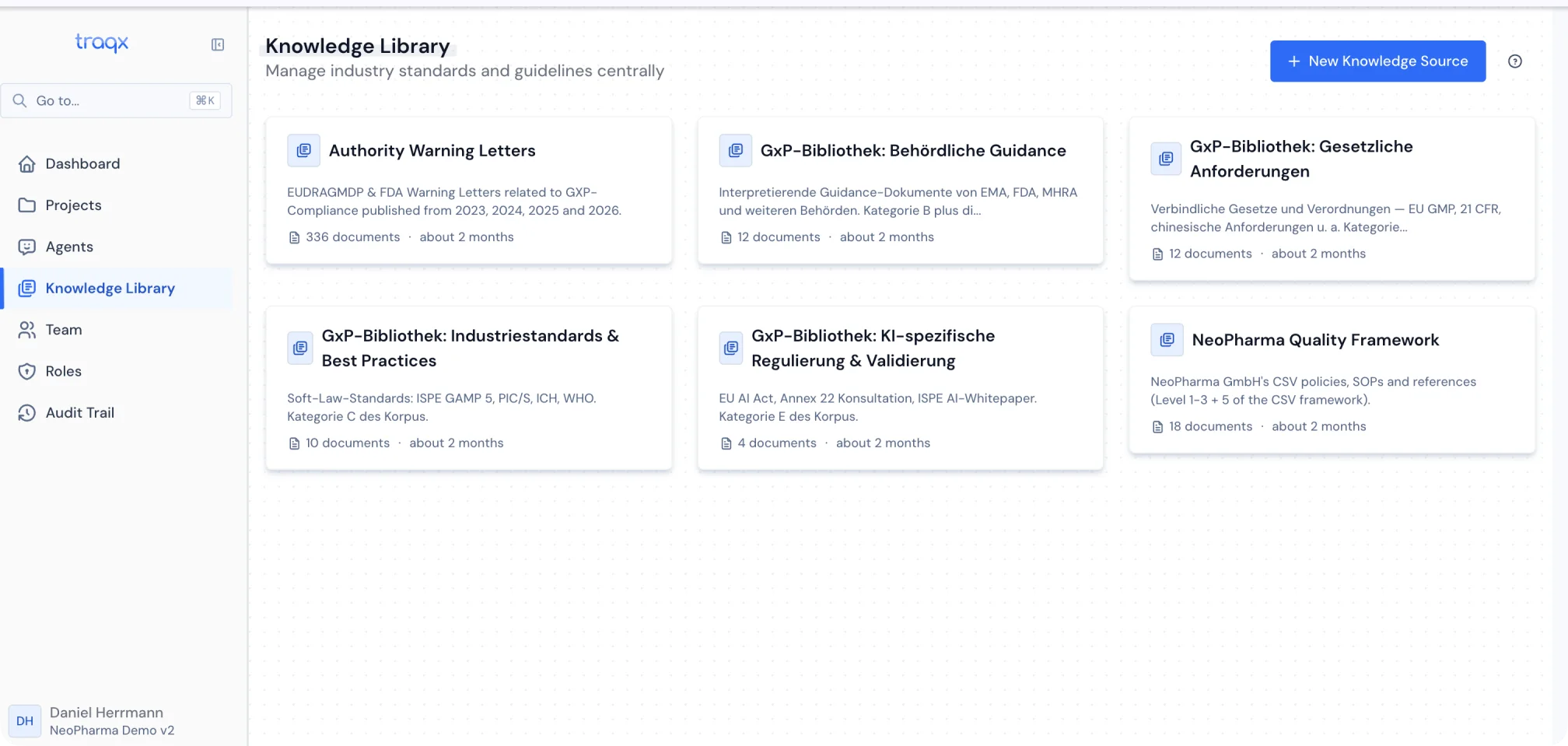
Word or Excel templates, SOPs, policies and project sources
USE CASE · Supplier assessment
traqx maps questionnaires, certificates, audit reports, contracts and SLAs to your criteria and prepares the assessment in the intended template. Gaps stay visible — the decision stays with your team.
No obligation · personal · straight in the calendar
THE RECURRING PATTERN
The work case uses the same controlled traqx logic as every other document use case.
Word or Excel templates, SOPs, policies and project sources
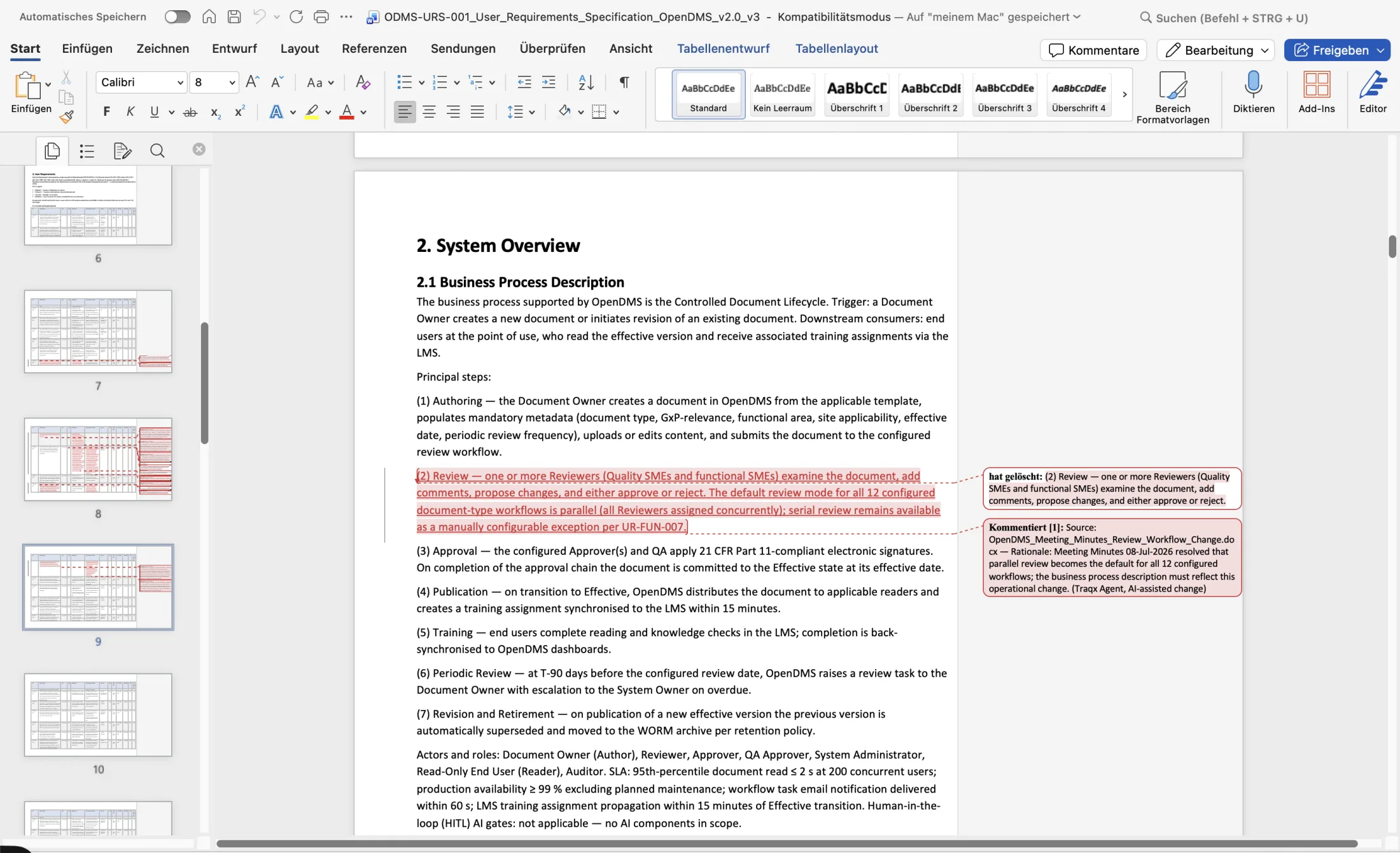
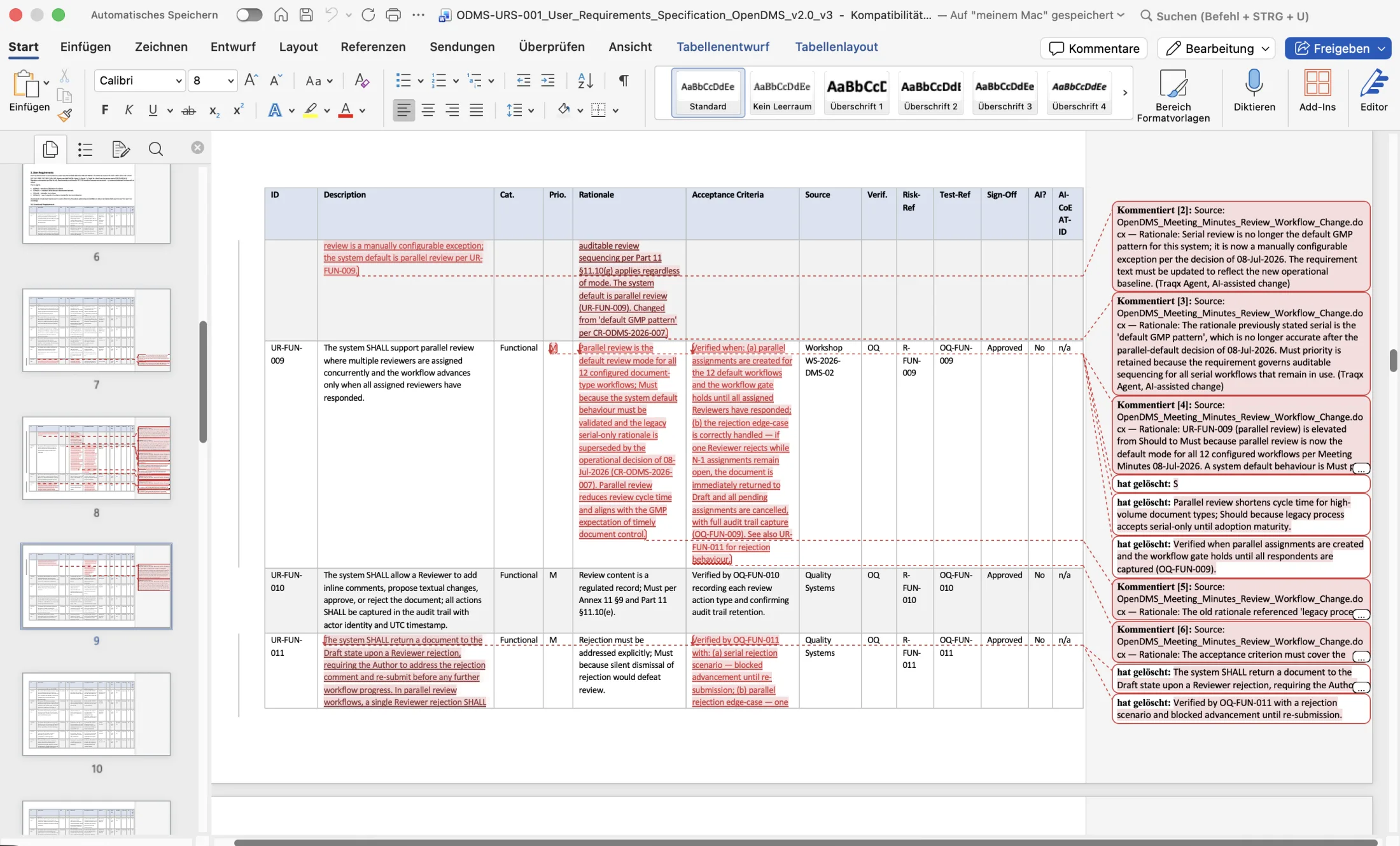
Sources, changes and open points stay connected in the work state.
The expert reviews and decides; formal approval stays in the responsible process.
SUPPLIER ASSESSMENT
Questionnaires, certificates, audit reports, contracts and SLAs have to be checked against internal criteria, SOPs and the assessment template.
For each criterion, the reviewer has to find the relevant passage across multiple supplier documents.
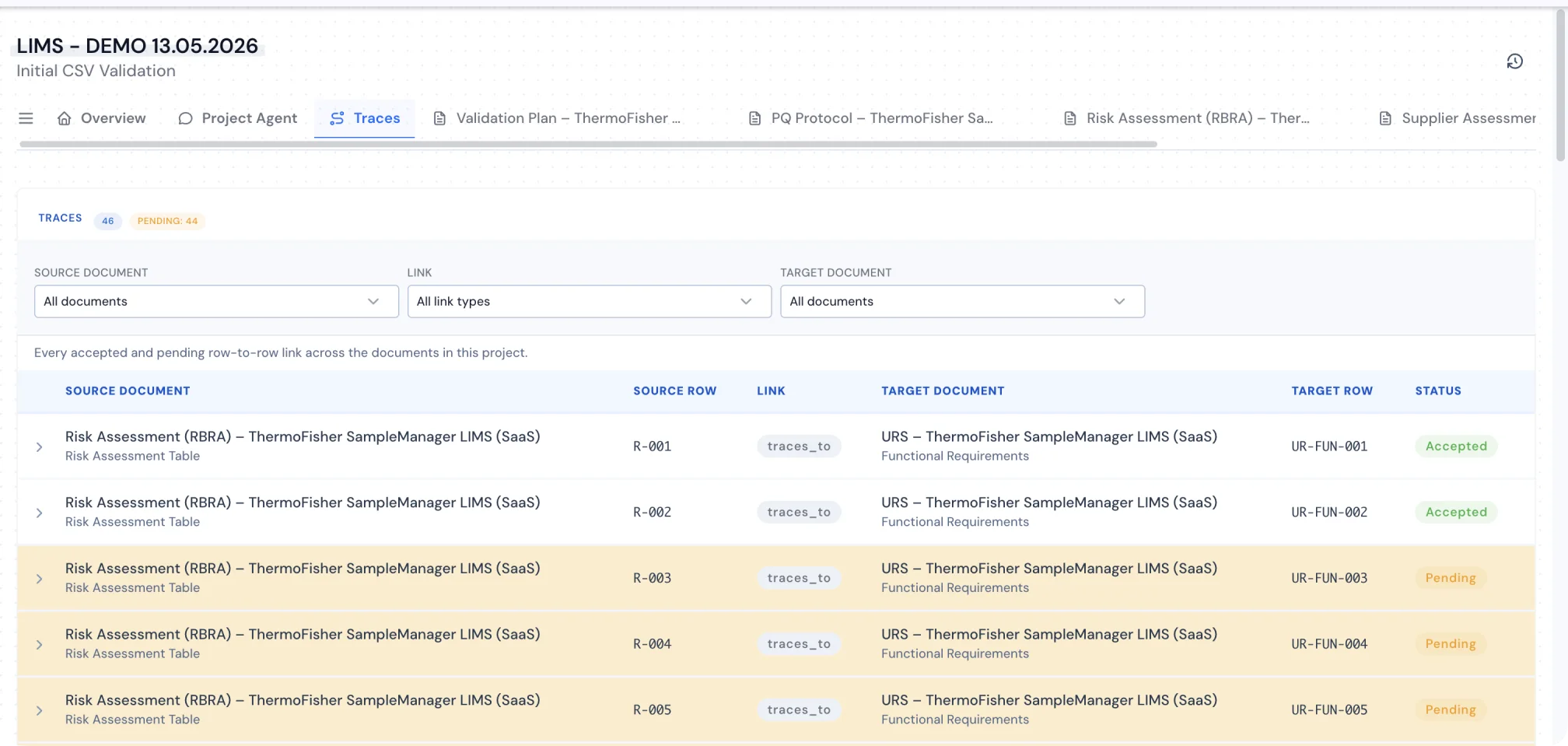
traqx maps relevant passages from controlled supplier documents to the assessment criterion.
Missing, expired or contradictory evidence is easy to miss in assessment spreadsheets.
Missing or conflicting information is marked as an open point rather than silently completed.
Rationales and sources do not sit consistently with the assessment draft.
The draft shows source and rationale; the accountable expert corrects and decides.
Built for the AI requirements of EU GMP Annex 22: AI prepares the work, your experts review and decide — traceable in the audit trail.
THE CONNECTED EVIDENCE PATH
Five visible stations, one continuous work state.
REVIEW CRITERIA
No autonomous quality decision or formal release: traqx prepares document work; the accountable expert decides.
01
SourceGROUND02
StatusVERIFY03
HumanDECIDEOPERATIONS & SYSTEM FIT
DOCUMENT USE CASE · INCLUDED IN traqx
traqx connects your qualification or assessment SOP, criteria, templates and submitted supplier evidence. It maps documents to criteria, flags missing or conflicting evidence and prepares the Supplier Assessment in the intended template. Your team reviews and decides; formal supplier approval remains in the responsible process.
Supplier qualification has to show why a supplier is suitable for the defined scope, which evidence supports that decision and what is still missing. ICH Q10 identifies pre-selection assessment, clear responsibilities and ongoing performance monitoring as core controls. traqx brings criteria, documents, gaps and requalification dates together from your released sources and shows what each statement rests on. The decision stays with the accountable team.
FAQ
Yes. Document-based preparation of Supplier Assessments is a direct work case in traqx — with controlled evidence and visible open points.
For example questionnaires, certificates, audit reports, contracts, SLAs and other approved evidence—limited to the source room you define.
No. traqx prepares the assessment draft and makes evidence, gaps and rationales visible. Formal decision remains with the accountable team.
ONE PRODUCT · ONE REAL DOCUMENT
In the personal live demo we clarify your template, governing SOP or policy and concrete task — and show the document workflow directly in the system.
No obligation · personal · straight in the calendar