

Templates and governing context
Word or Excel templates, SOPs, policies and project sources
USE CASE · Audit readiness · evidence before the audit
traqx reconciles scope, SOPs and evidence against your source base — hotspots, gaps and owners become visible before the inspection starts.
No obligation · personal · straight in the calendar
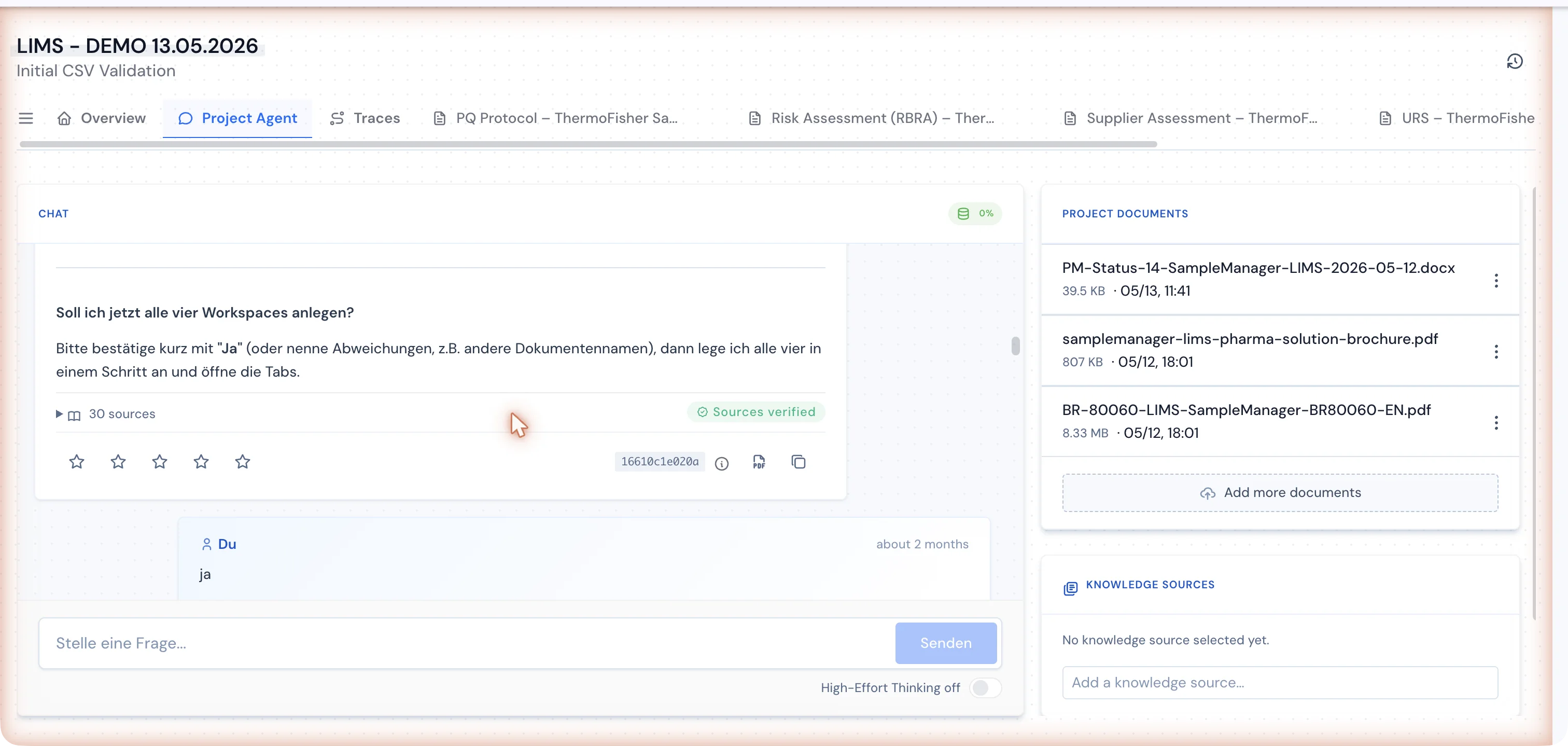
THE RECURRING PATTERN
The work case uses the same controlled traqx logic as every other document use case.
Word or Excel templates, SOPs, policies and project sources
Sources, changes and open points stay connected in the work state.
The expert reviews and decides; formal approval stays in the responsible process.
Why audit preparation is stressful
When an inspection draws closer, knowledge is rarely the problem. The problem is <b>distribution</b>: evidence sits in documents, emails, systems and heads. Teams find out too late which gap can become critical — and then prepare the wrong thing under time pressure.
SOPs, artefacts, email approvals and unwritten knowledge are spread across systems and heads. Whoever needs the complete evidence path pieces it together from scratch every time.
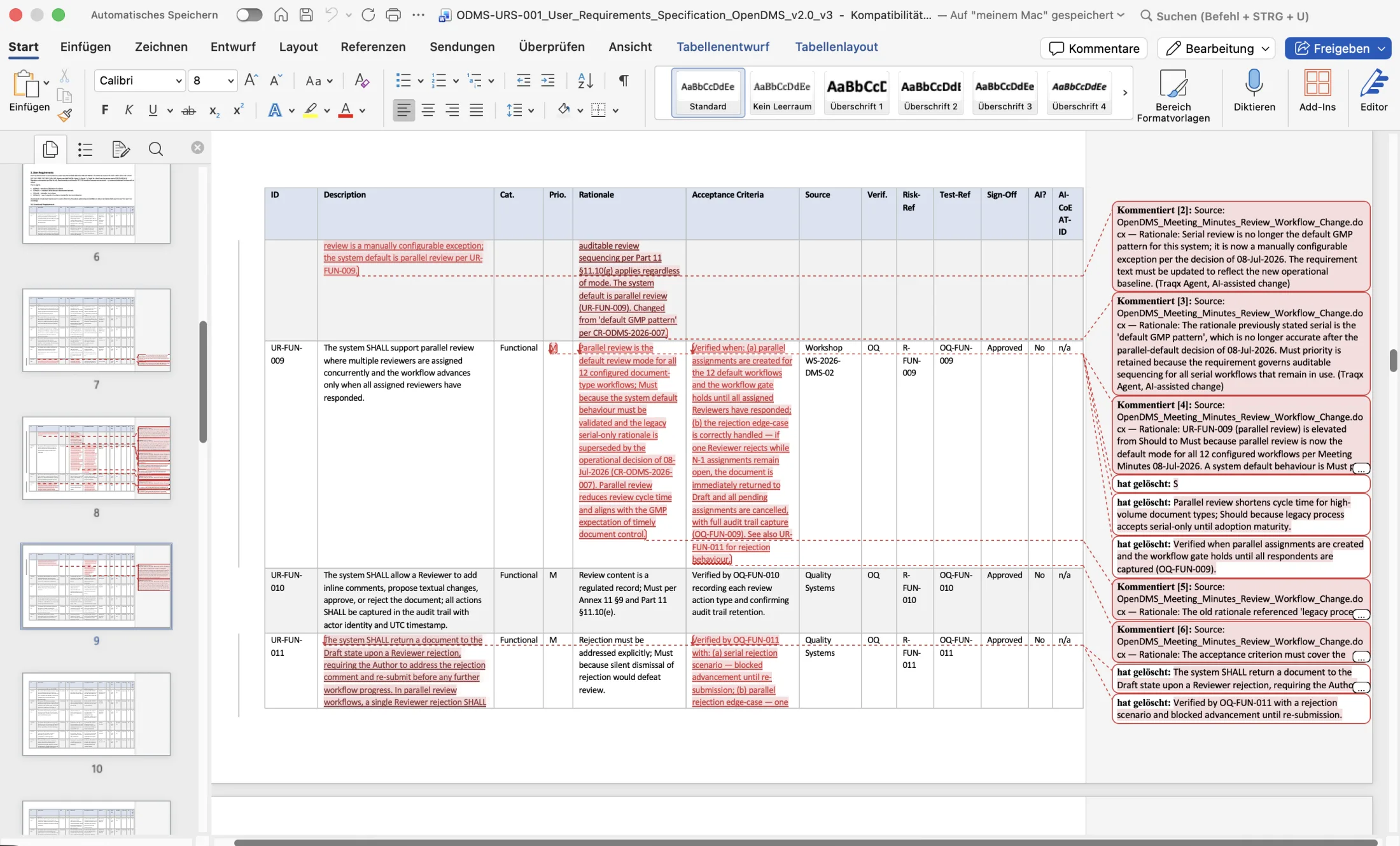
Hotspots and gap hints live as pending suggestions on the evidence they belong to. Nothing moves into your preparation list without human action — <b>no audit finding writes itself</b>.
Which evidence gap really hurts in an audit, the team often only notices in the inspection itself. Preparation runs on gut feeling instead of on a prioritised gap list.
Acceptance, correction or rejection of a classification remains with the expert. traqx documents the person, role, time and rationale of the review decision traceably.
Every hotspot needs a robust rationale with a source reference. If it is only drafted just before the audit, it is thin — and that is exactly what becomes a finding.
Hotspots and briefing statements rely only on your approved source pool. Every citation is checked deterministically; a fabricated source is made visible as a <b>warning</b>, not served as audit evidence.
Built for the AI requirements of EU GMP Annex 22: AI prepares the work, your experts review and decide — traceable in the audit trail.
THE CONNECTED EVIDENCE PATH
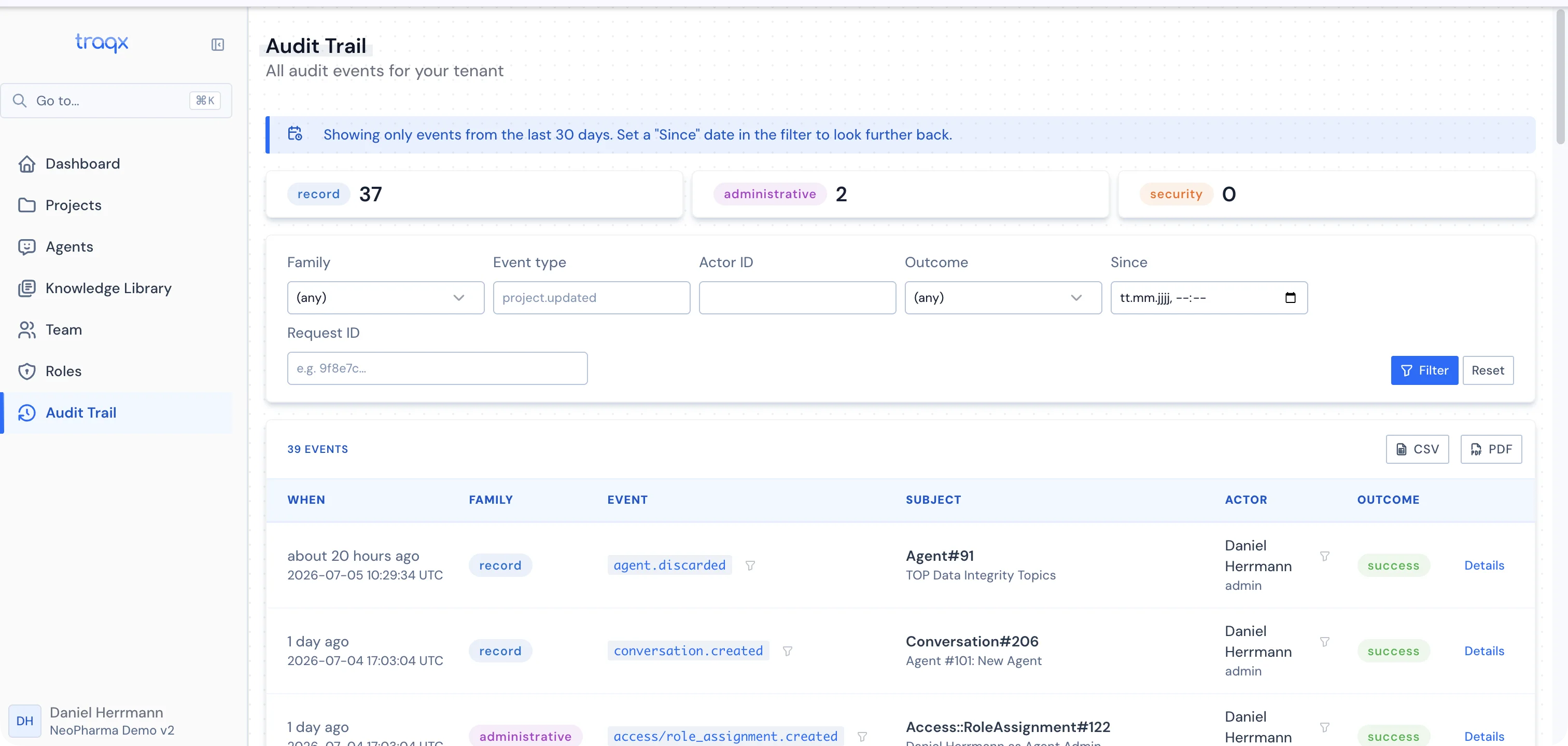
One audit case, five visible stations — each works from the state of the one before. Real product views and illustrated system states, synthetic demo data throughout.
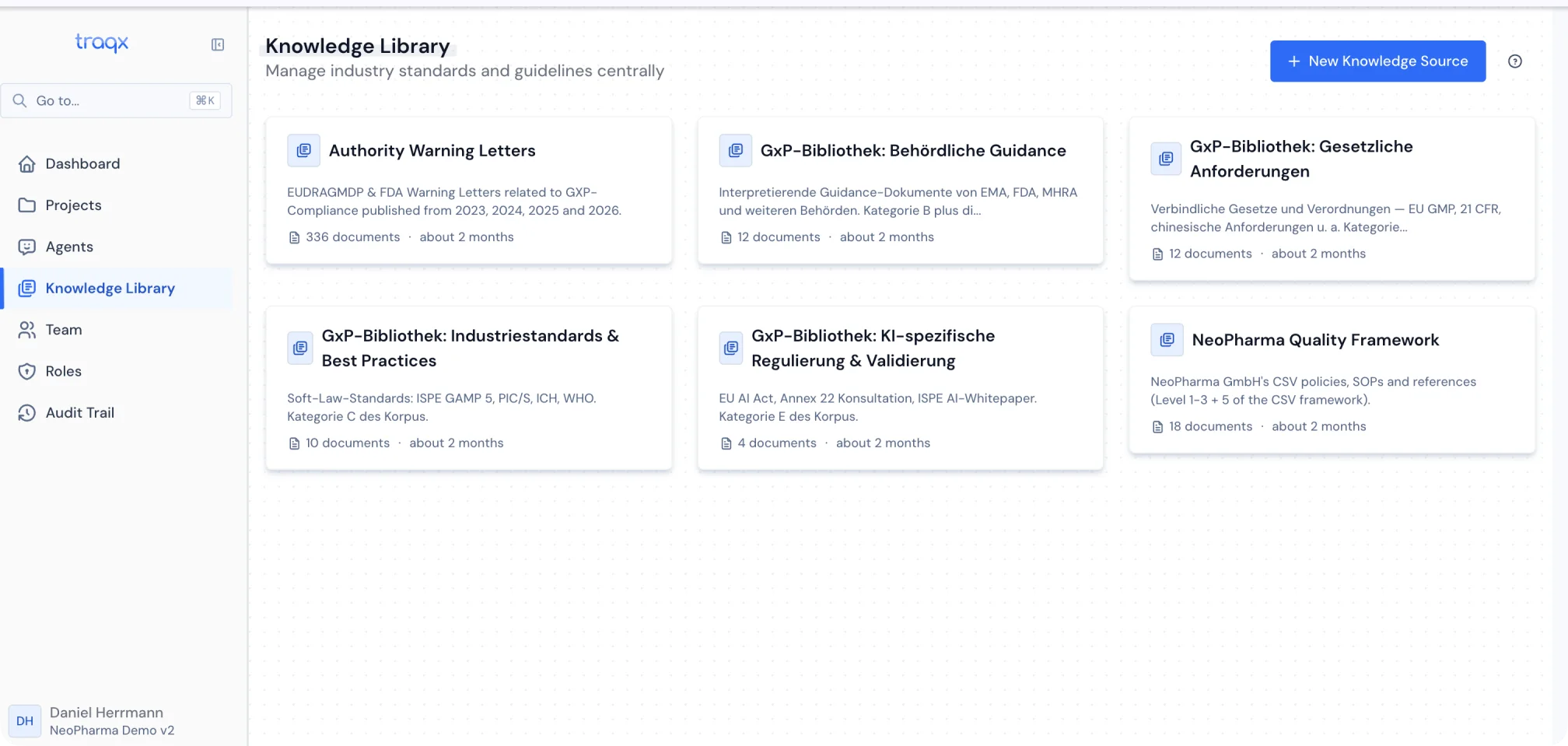
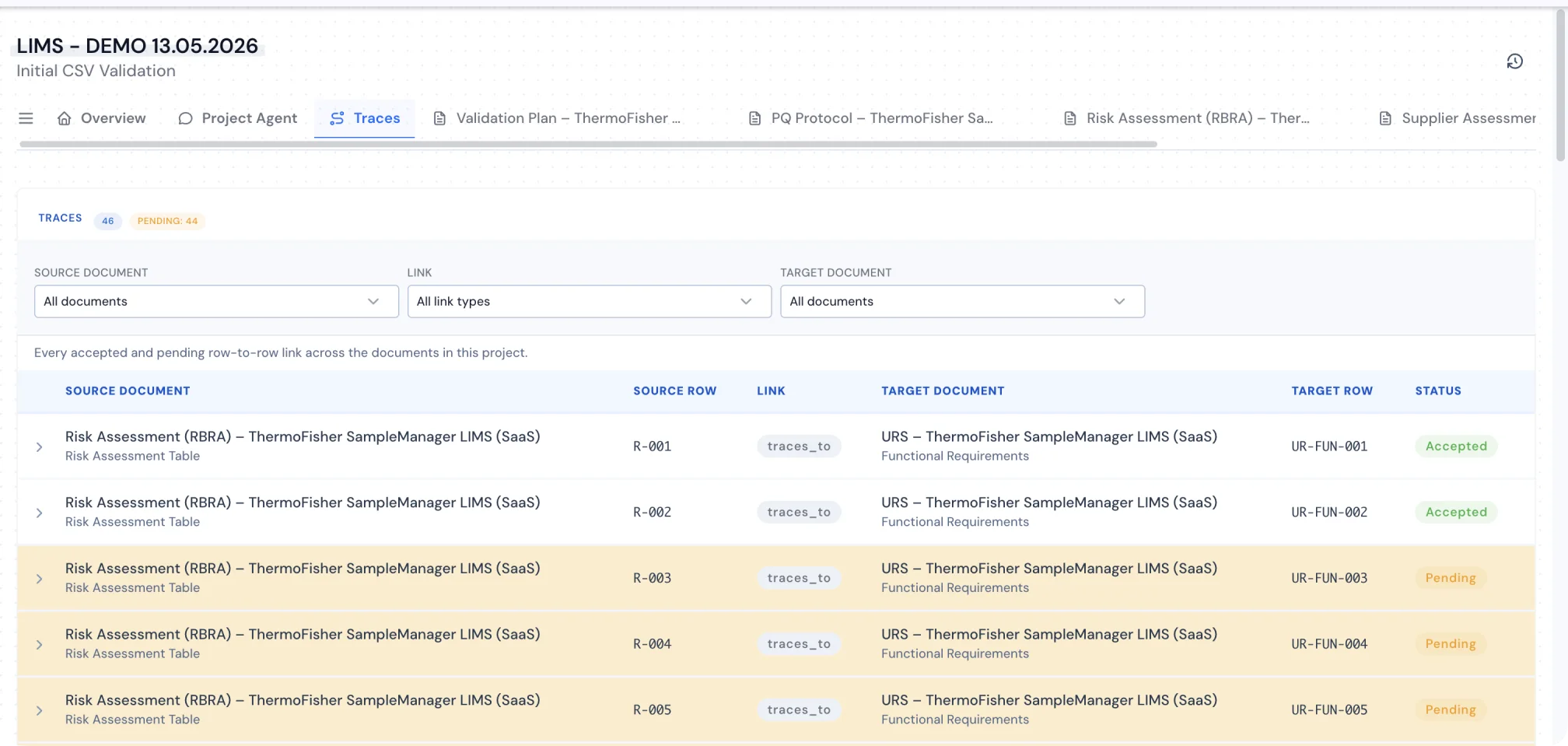
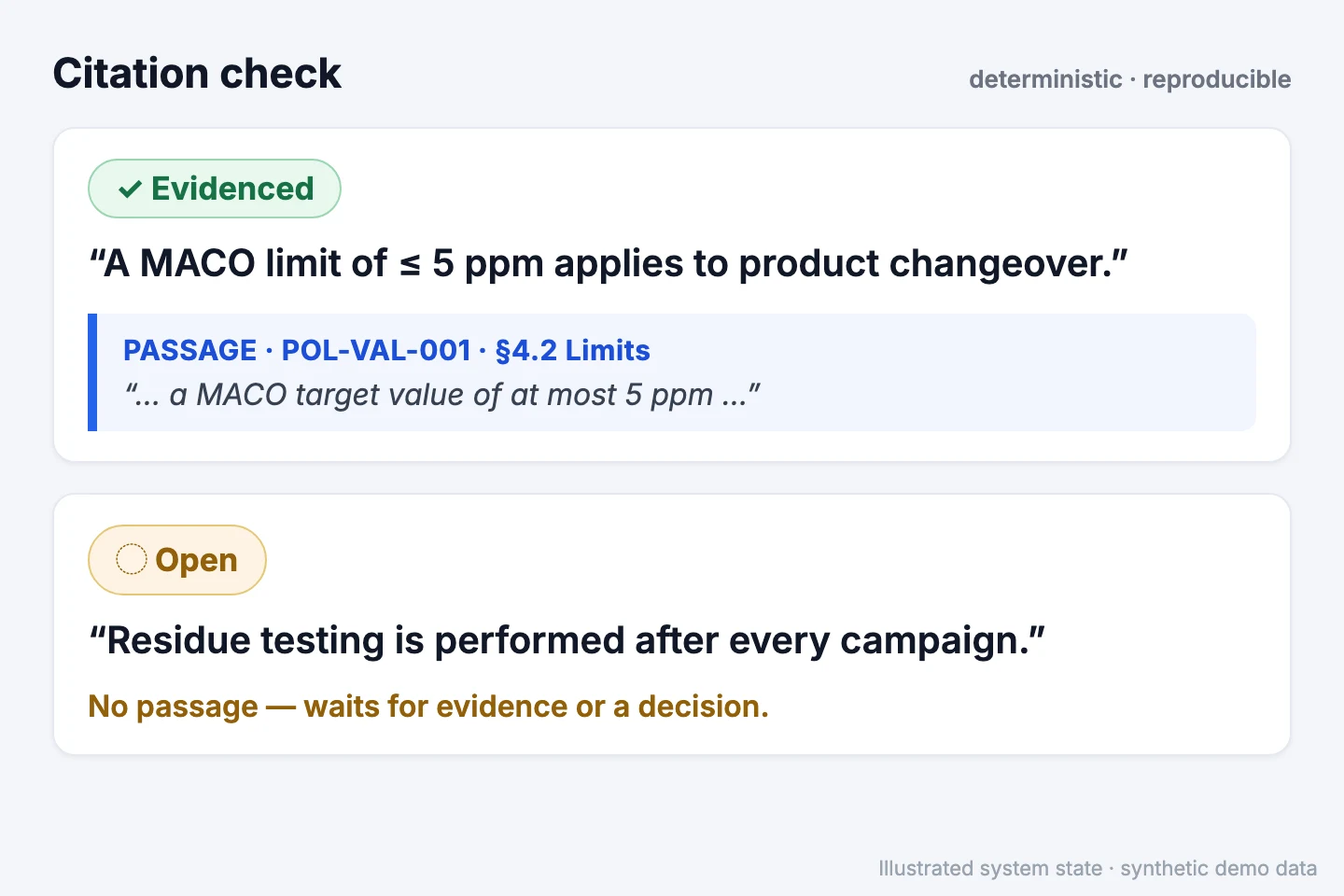
By construction
traqx does not guarantee an inspection outcome and does not declare a company ready by default — the platform supports preparation and evidence management. We only publish real time or hit-rate effects once we have robust real-project or case-study data.
01
Every hotspotsource-bound02
Scope listgaps prioritised03
0silent AI commitmentsOPERATIONS & SYSTEM FIT
Audit readiness software · Pharma
Audit readiness software turns the audit scope, SOPs, evidence and open points into a reviewable work item. traqx prepares answers and work packages with their sources; QA prioritises, corrects and decides. The preparation is structured, but that does not automatically make a company audit-ready or predict the inspection outcome.
FAQ
Being able to answer at any time: keeping evidence, justifications and versions in a state where an inspection can verify them without a search operation. Audit readiness is not a project before the audit — it is a state that emerges from daily work, or doesn't.
With a gap analysis along the relevant requirements, consolidated evidence and briefed owners. The biggest lever sits earlier: when sources, versions and approvals stay connected continuously, preparation shrinks from a search operation to a review.
Typically validation documentation, SOPs with training records, change and deviation history (change control, CAPA), audit trails and supplier assessments. What counts is less the volume than the traceability: where does the statement come from, who approved it when, and on what basis?
It searches large document sets for gaps and contradictions, then drafts answers with a direct link to the source. QA reviews, corrects and prioritises. Those decisions remain documented at the relevant work item. The result is an evidenced gap list rather than a judgement based on gut feeling.
traqx handles the substantive preparation: scope, evidence, open points and draft answers. Your existing tools for audit scheduling, findings and CAPA continue unchanged.
AI-generated audit answers remain source-bound when every material statement points to a specific source location and that link is checked deterministically against the source before output. In traqx, QA can inspect the source directly, correct the draft and remove unsupported or open points before use. Technical approval remains human.
ONE PRODUCT · ONE REAL DOCUMENT
In the personal live demo we clarify your template, governing SOP or policy and concrete task — and show the document workflow directly in the system.
No obligation · personal · straight in the calendar